
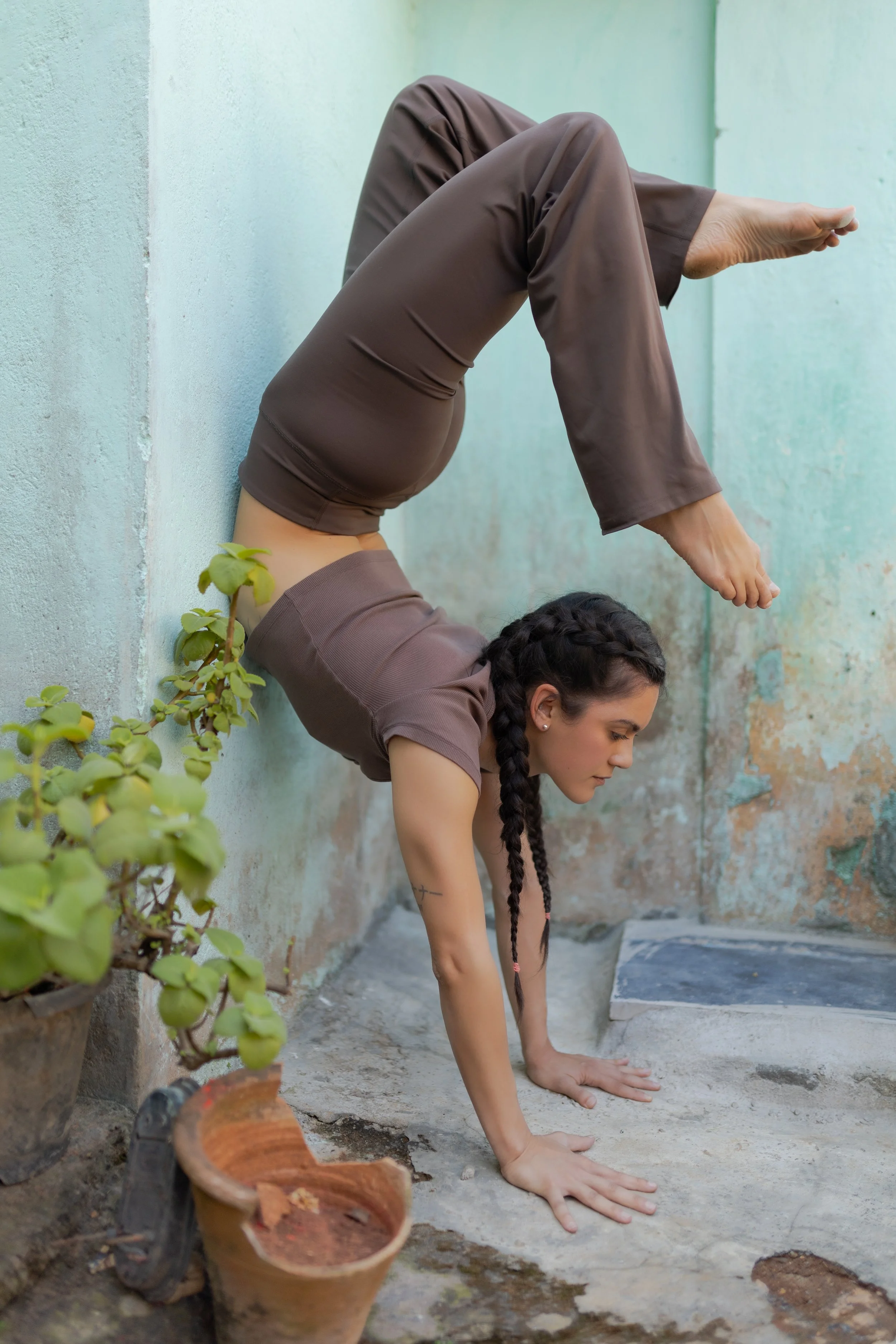
Your most open
backbend yet.
A personalised online coaching program for yogis and movement enthusiasts ready to safely open their spine — with me guiding you every step of the way, at your own pace, from anywhere in the world.
— What Is This Programme?
This is a private online coaching programme focused on backbending — designed for yoga practitioners and movement enthusiasts who want to make structured, safe, and measurable progress.
Each student receives an individualised training plan, regular video feedback, and programme adjustments based on their specific progression. The method draws from the Mysore style of teaching: rather than following pre-recorded classes, each student works at their own level and rhythm with guidance.
Online Backbend Coaching

Format
Online and self-paced
Access from anywhere. No fixed class times.
Structure
Fully Individualised
No shared curriculum. Each plan is built for one student.
Frequency
1, 2 or 3 times per week
Different tracks depending on goals.
Feedback
Every 1-2 weeks
Video submissions reviewed and responded to personally.
Commitment
2-Months Minimum
Monthly, 6-month, and 9-month extensions available.
Level
All Levels Welcome
From complete beginners to experienced practitioners.

Who Is This For?
Every time you push further into a backbend, your lower back takes the strain. So you hold back, unsure whether that's protecting you or keeping you in place. Without someone to explain what's actually happening, it's impossible to know how to move safely past it.
COMMON OBSTACLES
You stretch daily. You foam roll. You've worked through every shoulder opener you can find. But in a backbend, the chest and shoulders still feel locked. Tightness in these areas is rarely a flexibility problem alone — it's a sequencing one.
Wheel. Dropbacks. Kapotasana. You've been working toward it for years, but something is always missing and without knowing exactly what that is. You keep returning to the same plateau, practice after practice.
with a personalised approach
WHAT BECOMES POSSIBLE
You learn to distribute load across the whole spine: thoracic mobility and hip flexor length carrying the depth that your lumbar was compensating for. Backbends become something to look forward to, not approach with caution.
You understand precisely which muscles need to release, which need to activate, and in what order — so the work you put in each session accumulates into lasting change, rather than resetting every time.
You have a clear, progressive path specific to your body with someone giving feedback on your practice, identifying what's holding you back, and adjusting your plan until the pieces fall into place.
The missing piece is rarely pushing more. It's a plan built for your specific body — and someone who can see what you can't see yourself.
This isn't a regular course.
It's your practice.
I started working on backbends because I was struggling with them in my own Ashtanga practice. For a long time, I kept hitting the same wall until I made one simple but significant decision: to dedicate one or two days a week exclusively to backbending. That focused attention changed everything.
As my body evolved, so did my practice. I went on to explore backbending through Prana Vashya Yoga, flexibility training, and contortion. Each discipline taught me something different about how the spine opens, what it needs to feel safe, and how long real change actually takes. That breadth of experience is what I bring to your practice.
I know what it feels like to be stuck. I also know exactly what it takes to move past it,
and I'm here to help you do the same.
What working with me
actually looks like
Three phases — from the moment you join to your end-of-cycle review. Simple, consistent, and always personal.
01 Your Initial Assessment
Before I design anything, I want to understand where you are right now.
Baseline flexibility & strength video submission
I identify your specific restrictions and weak points
We align on your goals and training frequency
I build and send your personalised opening plan
02 Ongoing Check-ins
Where the real work and progress happens.
You submit progress videos every 1–2 weeks
I send back detailed, personalised video feedback
I adjust your plan based on what I see
Optional: journaling energy, ease, and mental shifts
03 Your Cycle Review
At the end of your cycle, we reflect on how far you've come.
Side-by-side before/after video analysis
We celebrate your milestones together
I give you personalised next step recommendations
Intensive+ students: live private session included
Coming Soon
•
How To Get Started
•
Coming Soon • How To Get Started •
TESTIMONIALS
-
![A woman holding a decorated cup and a paintbrush, with a potted plant in the background.]()
Elisa (26) Counseler & Yoga Teacher
I am so grateful for my experience in 1:1 with Lee.
We mostly focused on backbends and Lee really created a safe space for me at any time and her calming voice helps to focus. I felt encouraged, supported and challenged at the same time . She gave me good tips on how to integrate the drills and asanas she showed me in my home practise and her words really stuck in my head. I am incorporating a lot of things I practiced with her into my practice and have already achieved some of my goals. For me she is a really inspiring person at many aspects and i can highly recommend to practise with her.
-
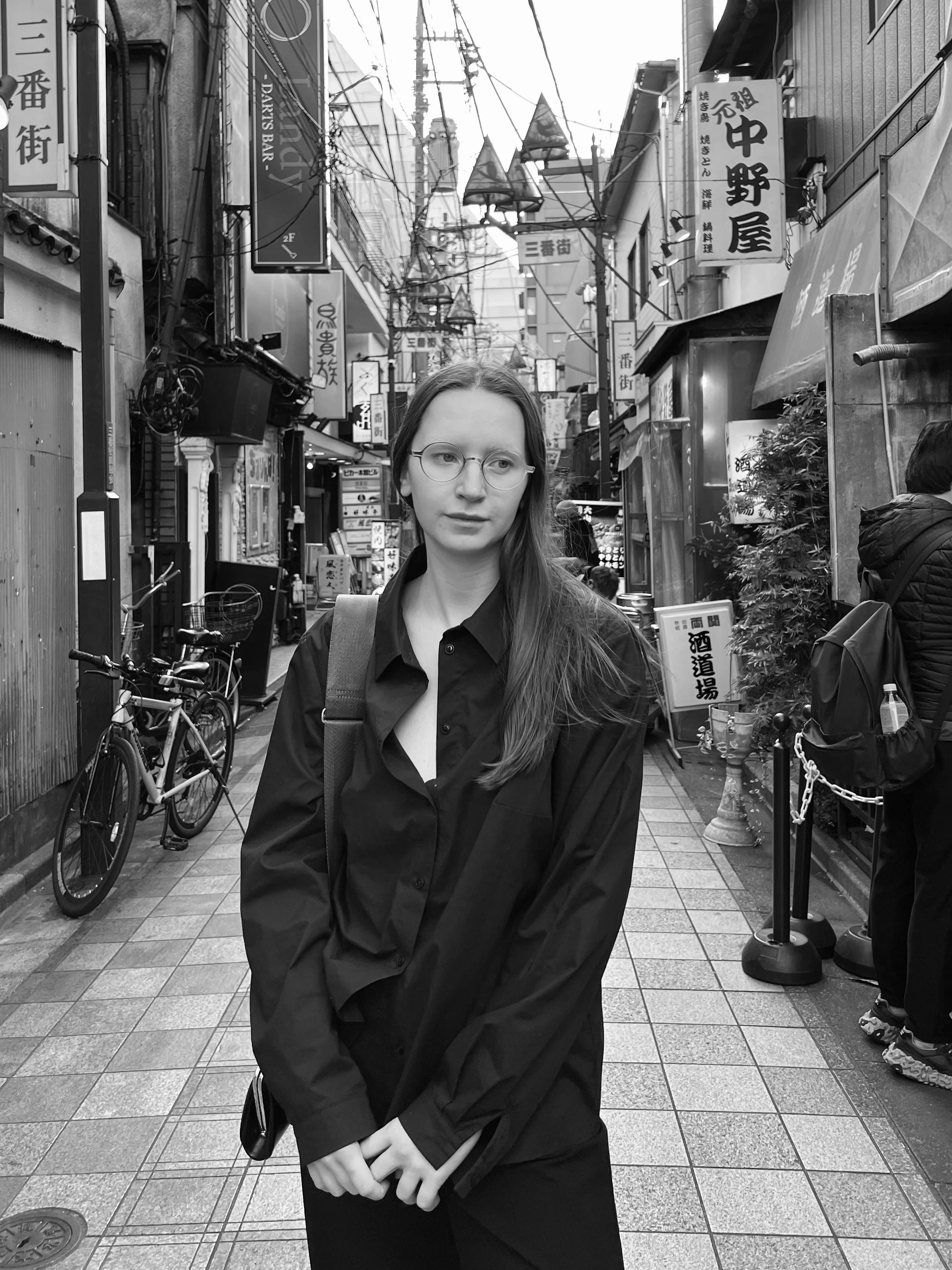
![A woman with long hair, glasses, and a black shirt stands in a busy, narrow street with Japanese signs, bicycles, and pedestrians, in an urban setting.]()
Yana (26) Demand Planner
Lee's guidance, coupled with her insightful corrections, provided me with a safe haven for approaching advanced postures. We delved into the backbends, specifically focusing on Drop backs and Kapotasana. Her teaching style made the seemingly impossible feel attainable. What sets Lee apart is not only her expertise but also her warm and welcoming nature. In her presence, I felt secure and at ease.
The progress I've made is undeniable, and I'm eager to continue this journey with Lee. I highly recommend her for anyone looking to enhance their yoga practice.
-
![Woman with curly hair holding a camera, overlooking a scene with trees and her shadow on the ground in black and white.]()
Déborah (30) Executive Assistant
I am very happy to have crossed paths with Lee. From the very first 1:! class, Lee demonstrated an innate ability to concentrate on enhancing and deepening my backbends.
I've not only made substantial progress in various yoga postures, but I've also learned to approach them with greater awareness and safety. Many of the techniques we've explored in our sessions have seamlessly integrated into my personal practice, leading to significant positive changes.
Our journey together began in February 2023, and I'm thrilled to continue working with Lee.
-
![Black and white photo of a woman with shoulder-length wavy hair, smiling, against a plain background.]()
Clarisse (32) Product Marketing Manager
I have been attending Lee's classes for a few months now, and joined a retreat over the summer. I love her teaching method, and how she breaks down a practice to prepare the body for specific asanas.
My backbend practice, especially, has completely improved since attending her classes, and I managed to unlock parts of my body that had been blocking me. Her devotion to the practice is also uplifting and I thoroughly enjoy spending time with her, practicing or chatting before and after class.
I can only recommend practicing with Lee!



Elevate Your Backbends
I keep this programme intentionally small — because genuine individual attention is the whole point. Add your name to the waitlist and I'll reach out personally before enrolment opens.
Frequently Asked Questions
Do I need prior yoga or backbending experience?
1
No prior experience is required. The initial assessment establishes your starting point, and the programme is built from there. I've worked with complete beginners and experienced practitioners alike.
How is this different from a pre-recorded course?
2
This is not a fixed curriculum. Your training plan, progressions, and feedback are specific to your body and updated every 1–2 weeks based on your submitted videos.
What does a typical week look like?
3
You receive a written session plan with video references. You practice, film the assigned poses or drills, and send them to me. I review everything and respond with a personalised video.
I have a lower back pain, can I still join?
4
Lumbar safety is central to how I teach backbending. If you have an existing injury or condition, please consult your physio before starting. Please mention it during the assessment so I can adapt your plan accordingly.
Why is there a 2-month minimum?
5
Meaningful structural and physical changes require time. A 2-month minimum ensures enough consistency and impact to actually see visible results. Most students notice a real shift around weeks 6–8.
What can I expect in the first weeks?
6
Within the first 4–6 weeks, most students notice increased spinal mobility, noticeable shoulder and hip flexibility gains, better body awareness in active vs. passive stretching, and higher energy levels. By months 3–6, the changes go deeper: stronger supporting muscles, smoother transitions, improved breathing in poses, and a more regulated nervous system — less tension.
What's possible after 6 months or more?
7
With consistent practice over 6–9 months, advanced poses become accessible. Students also report greater structural alignment across the spine, shoulders, and hips, a solid technique that supports an independent practice long-term, and for some, hormonal balance benefits, especially when paired with cycle syncing.
What equipment do I need?
8
A yoga mat, two blocks, and a phone with camera for video submissions. A strap and bolster are useful but not always essential. Everything else is guided through the programme.